
TicorAgent ONE
PalmAgentFinance
4.423.00 Reviews
- Version
- 4.8.5.1.5
- Installs
- 10.00K
- Age Rating
- Everyone
Screenshots
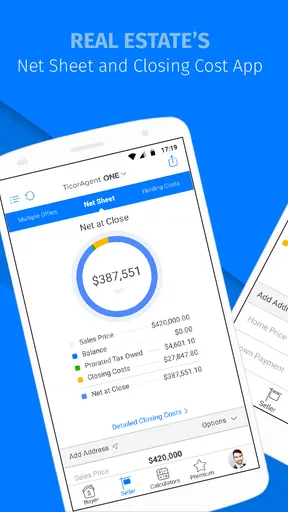
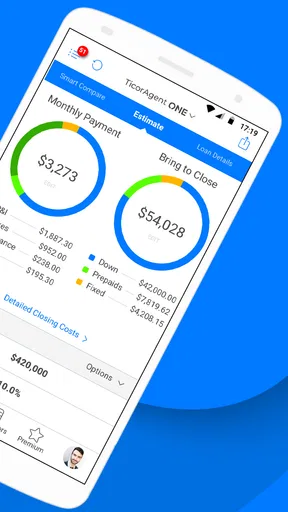
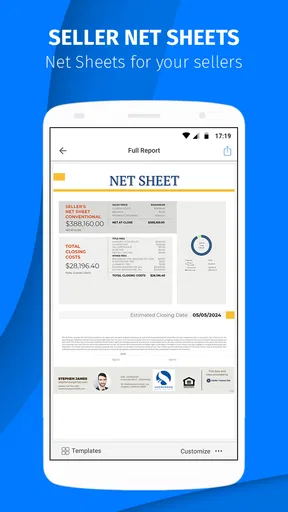


Our Review of TicorAgent ONE
 Analysis by Appyee
Real estate work often depends on being useful at exactly the moment a client, property, or transaction needs attention. TicorAgent ONE is built for that professional setting rather than for general personal finance, and that focus is its main appeal. I see it as a practical companion for real estate professionals who want a dedicated mobile tool connected to their working routine, not as a replacement for a full desktop transaction system or a broad personal-money app.
The app comes from PalmAgent and sits in the finance category, although its real purpose is much narrower than budgeting, banking, or investing. Its store summary positions it for real estate professionals, and that distinction matters before you install it. If your daily work involves clients, properties, and the movement from conversation to completed transaction, the app is easier to understand. If you are simply looking for a household expense tracker, mortgage calculator, or stock portfolio, this is the wrong direction.
My overall view is favorable but measured: TicorAgent ONE is most convincing when used as part of a real estate workflow, especially when a professional needs mobile access during a busy day. Its value is less about flashy presentation and more about reducing the distance between the office and the field. The trade-off is that a specialized professional app can feel limited when you expect the broad flexibility of a general productivity platform.
How TicorAgent ONE fits into a real estate workday
The clearest way to judge this app is to imagine a normal day rather than a store page. I might begin by reviewing the day’s appointments, then move between calls, property visits, document-related conversations, and follow-up messages. In that setting, a mobile real estate tool has to be quick to open, easy to understand under pressure, and focused enough that I do not waste time searching through unrelated menus.
That is where the app’s professional identity helps. It is not trying to be everything for everyone. A real estate agent or another property professional can approach it with a specific expectation: this is a work tool intended to support the business side of property activity. That makes it more relevant than a generic notes app when the information being handled is tied directly to clients and transactions.
One useful habit is to treat the app as a coordination point rather than as the only place where every piece of work must live. I would use it for the parts of the day that benefit from a real estate-specific context, while keeping broader communication, long-form document editing, and company-required systems in their proper tools. This division prevents a common mistake: expecting one mobile app to replace an entire professional technology stack.
For example, after a property viewing, I could use the app as part of the follow-up routine instead of waiting until I return to a desk. The practical advantage is not merely saving a few taps. It is preserving the connection between an event in the field and the administrative work that follows. When several appointments happen close together, that continuity can be more valuable than a long list of advanced features.
A second useful workflow is to prepare before leaving the office. I would check what needs attention, identify the client or property context for each appointment, and make sure the app is ready before arriving. This sounds simple, but mobile tools often become frustrating when they are opened for the first time in front of a client. A small amount of preparation makes a focused app feel much more dependable.
The app also makes more sense for professionals who already have a repeatable process. If your work is organized around regular follow-ups, property conversations, and transaction milestones, a dedicated tool can reinforce that rhythm. If every day is handled differently and your company requires a separate platform for all official records, the benefit may be smaller.
What I found most useful about its focused design
The strongest evidence in favor of TicorAgent ONE is its specialization. Real estate professionals do not simply need another blank workspace. They need something that recognizes the kind of work they are doing. Even without turning the review into a feature checklist, the app’s identity gives it a practical advantage over generic finance applications that are designed for personal spending or household planning.
I also appreciate that the app is free to install. That lowers the barrier to testing it in a real work routine instead of making a decision based only on a description. There are in-app purchases ranging from $0.99 to $9.99 per item, so I would still review any optional purchase carefully before adopting the app across a team. The free entry point is helpful, but it should not be confused with unlimited professional functionality.
Its audience is also easy to identify. The content rating is Everyone, which makes the app broadly accessible from an age-rating perspective, but the intended user is still a working real estate professional. That difference is important: an app can be suitable for a wide age range while remaining highly specialized in purpose.
The current version is 4.8.5.1.5, and the minimum operating system is Android 7.0. For someone using an older Android phone, checking compatibility before planning a work rollout is sensible. For most users with a reasonably current device, that requirement should not be the main obstacle, but professional reliability depends on more than installation. Battery condition, connectivity, screen size, and the rest of the office workflow matter too.
The app’s history also suggests that it is not a brand-new experiment. It was released on October 10, 2014, which gives it a long presence compared with many short-lived mobile tools. I would not treat age alone as proof of quality, but it does make the app more interesting for professionals who prefer an established product over a newly launched utility. The important question remains whether it fits the way you work today.
Its audience response is encouraging without being overwhelming. The app has a 4.4 average from around 58 ratings, with about 23 written reviews. I read that as a positive signal, but not as a reason to assume it will suit every brokerage or role. A smaller review base can tell me that users are generally satisfied while still leaving plenty of room for individual workflow differences.
A realistic scenario where the app earns its place
Imagine an agent moving through a day of showings with a client who is comparing several homes. Between appointments, the agent needs to stay oriented, remember which property prompted which question, and keep the next action from disappearing into a crowded phone. A dedicated real estate app can serve as the professional anchor in that sequence.
I would use TicorAgent ONE before the first appointment to organize the working context, then return to it during short gaps rather than trying to reconstruct the entire day at night. The key benefit is reducing mental switching. I am not opening a general notes app, a personal finance tool, and several unrelated services while trying to remember which item belongs to the transaction. A focused app can make the work feel more deliberate.
There is also a useful boundary here. I would not rely on a mobile app alone for sensitive final decisions, formal document review, or anything that company policy requires to remain in an official system. Instead, I would use the app to support the process and then verify important details in the authoritative platform. That is a practical trade-off, not a criticism specific to this product: mobile convenience is strongest when it complements careful professional controls.
Another scenario involves a newer agent who is still building habits. A specialized application can help make the workday feel less scattered because it offers a place associated with the business rather than mixing professional tasks with personal reminders. The benefit is behavioral as much as technical. When a tool is opened for a clear reason, it becomes easier to establish consistent follow-up routines.
Where the experience may create friction
The meaningful weakness is the risk of overestimating what a focused mobile app can replace. Real estate work is often spread across brokerage systems, communication tools, calendars, document services, and compliance procedures. TicorAgent ONE may be useful inside that network, but I would not choose it expecting a single universal command center.
That limitation matters most for teams. An individual professional can adapt a personal workflow around the app, while a brokerage may need shared records, defined permissions, standardized reporting, and integrations that are dictated by company policy. Before recommending it to an entire office, I would test it with a small group and compare its daily use with the systems the brokerage already requires.
There is also a possible learning curve for people who expect a familiar consumer finance layout. The finance label may lead some users to imagine budgets, spending summaries, or banking tools. That expectation would be misleading. The app’s professional real estate orientation should be treated as the starting point, and anyone looking for personal money management should skip it rather than trying to force it into that role.
Optional in-app purchases are another point to handle carefully. The individual range is modest, but a purchase that seems minor on one phone can become a larger consideration when several employees need access. I would identify which functions are genuinely necessary, confirm how they fit company policy, and avoid paying for extras simply because the app is otherwise free.
Older hardware may introduce its own friction. The minimum Android requirement is 7.0, but meeting a software requirement does not guarantee a comfortable experience on every device. A small display, limited storage, weak battery, or unreliable mobile connection can make any field-based tool harder to use. I would test the app on the actual phones used during showings, not just on an office device.
Finally, professionals should be disciplined about information handling. Real estate work can involve private client and property details, so I would follow brokerage rules and avoid treating a convenient mobile screen as a substitute for approved record-keeping procedures. The app can support efficiency, but professional judgment still determines what belongs there and what must remain in a controlled company system.
Who should install it, and who should choose something else
I would recommend TicorAgent ONE first to independent real estate professionals who want a mobile tool with a clear property-business focus. It is also worth considering for agents who spend much of the day away from a desk and need to keep their work organized while moving between appointments. The app’s free installation makes a trial relatively approachable, provided the optional purchases are reviewed before regular use.
It may also suit a professional who dislikes building a workflow from generic tools. A calendar, notes application, spreadsheet, and messaging service can be flexible, but flexibility often means more setup and more opportunities to place information in the wrong location. A specialized app can be preferable when the user values context and simplicity over unlimited customization.
I would be more cautious for large teams with strict technology standards. If your brokerage already has a required platform for client records and transaction management, adding another app may create duplication instead of efficiency. In that situation, the better choice may be the company’s existing system, even if it feels less convenient, because consistency and compliance can matter more than a separate mobile experience.
Personal finance users should skip this app. Someone trying to track groceries, monitor a bank account, plan savings, or manage investments would be better served by an application designed specifically for those tasks. TicorAgent ONE is not attractive because it covers every financial need; it is attractive because it narrows its attention to real estate professionals.
I would also suggest skipping it if you want a highly customizable project-management environment. A general productivity platform may be better when your work includes complex task boards, custom databases, extensive automation, or collaboration across unrelated departments. The trade-off is that those alternatives require more configuration and may not feel as naturally aligned with property work.
How it compares with familiar alternatives
Compared with a general notes app, TicorAgent ONE has the advantage of professional context. Notes applications are excellent for quick capture, but they leave the user responsible for designing the structure. That can work for a highly organized agent, yet it may become messy when client conversations, property details, and follow-ups accumulate.
Compared with a spreadsheet, the app is potentially more approachable for mobile use. Spreadsheets offer control and can be adapted to almost anything, but they also invite inconsistent formatting and accidental changes. I would choose a spreadsheet when I need custom calculations or a report built around unusual requirements. I would choose the dedicated app when I want a more direct real estate workflow.
Compared with a full customer relationship management system, the decision is less straightforward. A CRM may provide deeper contact management, team visibility, automation, and reporting. TicorAgent ONE can be the better fit for a professional who wants a lighter mobile companion, but the CRM wins when the organization depends on centralized records and detailed collaboration.
Compared with a broad personal finance application, the products are not really substitutes. The ordinary finance app starts with money management for an individual or household. This one starts with the working reality of real estate. Choosing between them should be based on purpose, not on the shared finance category label.
My practical advice is to test the app against one complete work cycle: prepare for an appointment, use it during the field portion, complete the follow-up, and then check whether the information remains useful afterward. That test reveals more than opening the app once. It shows whether the tool actually reduces repeated work or simply adds another place to update.
My final recommendation
TicorAgent ONE succeeds when its focused identity matches the user. PalmAgent has created a finance-category app aimed at real estate professionals, and that narrow purpose is both its strongest quality and its main boundary. I like it as a mobile support tool for agents who want a more relevant alternative to blank notes, improvised spreadsheets, or unrelated personal-finance software.
I would recommend trying it if you work in real estate, spend significant time away from a desk, and are willing to fit it into an existing professional process. I would not present it as a universal replacement for brokerage systems, a complete CRM, or a personal money manager. The best results should come from using it deliberately, checking optional purchases, and keeping official records in the systems your organization trusts.
With over 10 thousand installs, an average rating of 4.4, and a long release history, it has enough presence to deserve consideration without making the decision automatic. My verdict is that it is a sensible, specialized choice for the right professional: useful when real estate context matters more than broad customization. For everyone else, a tool designed around their actual financial or productivity needs will be the better fit.
Verdict
Strengths of TicorAgent ONE
- Centralizes field tasks, client details, and agent communication in one app.
- Can reduce paperwork by keeping important records digitally accessible.
- Useful for agents who need access to work information while away from the office.
- A focused interface may be easier to learn than a broad business suite.
- Helps maintain a consistent workflow across teams using the same platform.
Limitations of TicorAgent ONE
- Its usefulness depends heavily on your company already using the TicorAgent system.
- Some features may require an account or permissions provided by an administrator.
- Users may face interruptions if mobile data or the service connection is unreliable.
- The app may feel limited for agents needing advanced reporting or customization.
- Storing work information on a phone requires careful attention to device security.
Other Releases by PalmAgent
View All
FidelityAgent ONE
Finance4.2

LawyersAgent ONE
Finance4.1

PalmAgent ONE
Finance3.4

ChicagoAgent ONE
Finance4.2
Similar Picks in This Category
View All
Google Wallet
Google LLC4.3

Airtel: Recharge, Bank & Loans
Airtel4.0

PayPal - Pay, Send, Save
PayPal Mobile4.2

DANA Indonesia Digital Wallet
PT Espay Debit Indonesia Koe4.5

Binance: Buy Bitcoin & Crypto
Binance Inc.4.8

Cash App
Block, Inc.4.7
Frequently Asked Questions
What is TicorAgent ONE and who is it designed for?
TicorAgent ONE is a real estate productivity platform created to help agents organize and manage important parts of their daily workflow in one place. Depending on the account and region, it may provide access to transaction information, documents, contacts, tasks, communication tools, and brokerage resources. It is mainly intended for authorized real estate professionals rather than casual users or home buyers looking for a standalone property-search app.
Do I need an account or an invitation to use TicorAgent ONE?
Yes, access generally depends on having valid credentials connected to a participating brokerage, organization, or service provider. Installing the app alone may not be enough to use its features. New users should confirm that their company has enabled TicorAgent ONE for them and obtain the correct sign-in details or invitation. If login fails, contacting the brokerage administrator or official support is usually more useful than reinstalling the application.
What can I do with TicorAgent ONE on Android or iOS?
The available tools can vary according to your role, subscription, brokerage configuration, and application version. In general, the app is intended to give real estate agents convenient mobile access to work-related information, transaction updates, documents, contacts, tasks, and notifications. Some functions may be more limited on a phone than on the web version, so users should not assume that every desktop feature is available in the mobile app.
Is TicorAgent ONE safe for handling real estate documents and client information?
TicorAgent ONE is designed for professional use, but users should still treat every document and client record as sensitive information. Use the official app store version, protect your account with a strong password, avoid sharing login details, and keep your device updated. It is also wise to use a secure network when reviewing or uploading files. Security features and data-handling policies may change, so review the provider’s current privacy and account-security information.
What should I check before downloading TicorAgent ONE?
Before downloading, confirm that TicorAgent ONE is the official application, that your brokerage or organization supports it, and that your Android or iOS device meets the required operating-system version. Check available storage, notification permissions, and whether the app requires access to files, contacts, camera, or other device features. Also review the latest update date, developer information, privacy policy, and user feedback, since availability and functionality can differ by location and account type.
